Minnesota Barndominiums: Why Barndos Are Smarter in MN Weather
If you’ve lived through a Minnesota winter, you already know the truth: our weather doesn’t care how nice your house looks. It cares whether your building was built for this.
Forty-below windchills. Two-foot snow dumps. Spring thaws that turn driveways into rivers. Summer storms that pop up out of nowhere with 70 mph gusts. A home in Minnesota has to handle all of it and most traditional stick-built homes are designed to a national average, not to what actually happens here.
That’s a big reason more Minnesota families are choosing barndominiums and specifically, post-frame barndominiums built with Wick Buildings systems. They’re not just a trend. For our climate, they’re a smarter way to build.
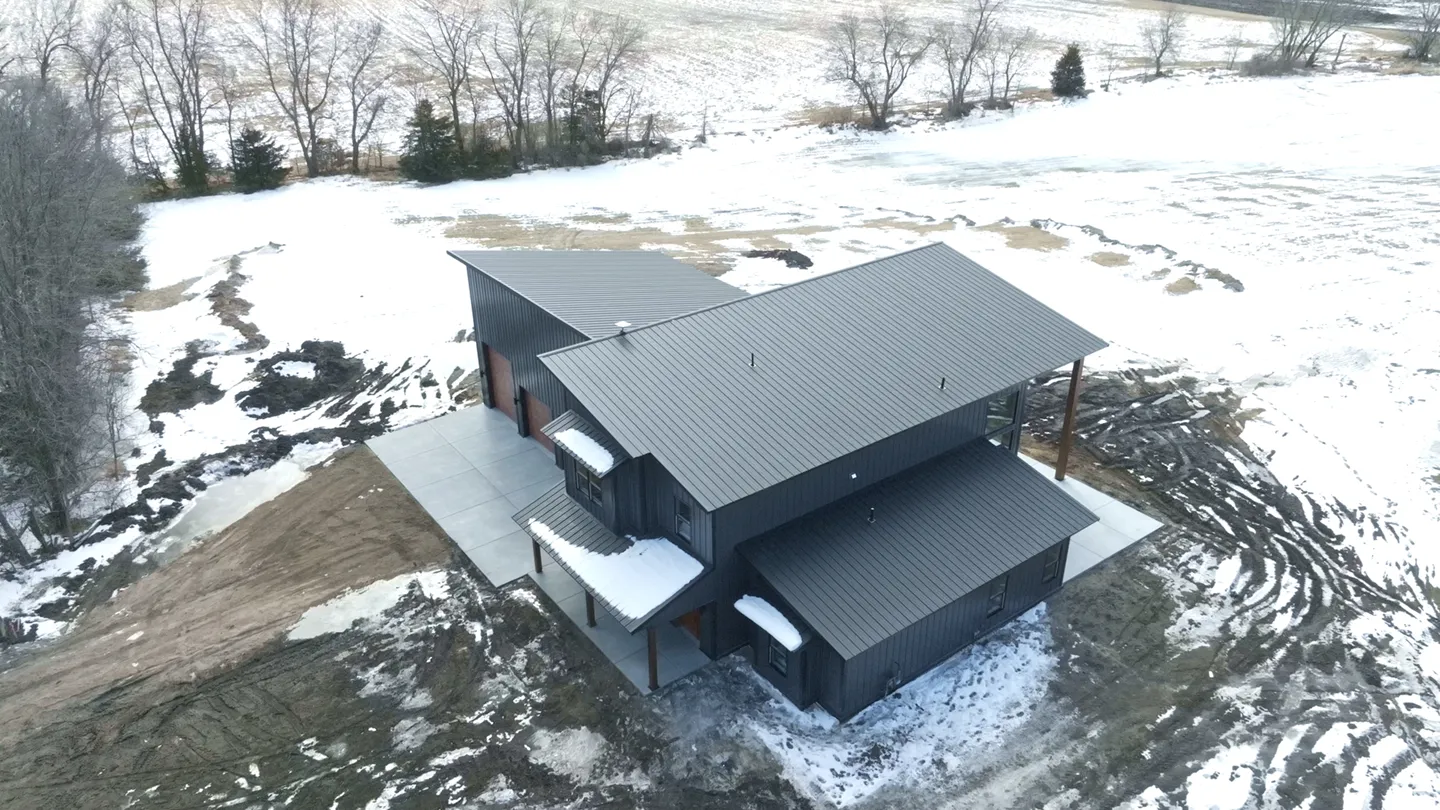
Here’s why:
1. Post-Frame Construction Is Built for Snow Loads
A standard stick-built house spaces studs every 16 inches and relies on a complex web of small members to carry the roof.
A post-frame barndominium uses large engineered columns spaced 8 feet apart or more, transferring roof loads directly to the ground through massive posts. That structural geometry handles heavy snow loads exceptionally well which matters when your roof is sitting under three feet of wet March snow.
Wick Buildings engineers every structure specifically for Upper Midwest snow loads. Not a generic spec from a national catalog. The actual load your roof will see in Minnesota.
2. Deeper Walls Mean Better Insulation
This one is huge.
In a typical 2×6 stick-built wall, you get about 5.5 inches of cavity space for insulation. That’s roughly an R-19 to R-21 wall.
A post-frame wall can easily be built to 8, 10, or even 12 inches deep which means you can pack in significantly more insulation. We’ve built barndos with R-30+ walls and R-60 attics that perform incredibly well in -25°F weather without burning through propane.
The result? Lower heating bills. More comfortable rooms in January. Less stress on your HVAC system. A home that actually feels good when it’s miserable outside.
3. Fewer Thermal Bridges, Less Heat Loss
Every stud in a stick-built wall is a small highway for cold air to travel through your insulation. The more studs, the more thermal bridging.
Post-frame construction has far fewer structural members in the wall. That means more continuous insulation and fewer cold spots. In Minnesota, where the temperature swing between inside and outside can be 100 degrees, that difference shows up on your energy bill every single month.
4. Foundations That Make Sense for Our Frost Line
Minnesota’s frost line runs deep at typically 42 to 60 inches depending on where you are in the state. Traditional homes require full perimeter footings dug below that frost line, which is expensive concrete work.
Post-frame barndominiums use engineered posts set below the frost line in protected footings, with a concrete slab inside. You get the structural integrity without the massive concrete cost and the building handles freeze-thaw cycles beautifully because it’s designed for them, not retrofitted to survive them.
5. Faster Build Time = Beating the Weather
Minnesota’s building season is short. Anyone who’s tried to pour concrete in November or frame a wall in February knows it.
Post-frame barndominiums go up significantly faster than traditional stick-built homes. The shell can often be dried-in within weeks, not months. That means more of your project happens inside, out of the snow and rain, and you’re far less likely to get caught with an unfinished frame heading into winter.
For families trying to move in before the holidays or before another -30°F stretch that timeline difference matters.
6. Metal Roofs That Shed Snow and Last for Decades
Standard asphalt shingles in Minnesota usually need replacing every 15-20 years thanks to ice dams, snow load cycles, and brutal UV exposure.
Wick Buildings barndominiums come standard with high-quality steel roofing engineered for our climate. Metal sheds snow naturally, resists ice dams, doesn’t trap moisture, and routinely lasts 40-50 years or more. One roof, done right, for the life of the home.
7. Built-In Storage for the Minnesota Lifestyle
Here’s the practical reality: Minnesotans have stuff. Boats. Snowmobiles. Side-by-sides. Tractors. Trailers. Hunting gear. Ice houses. Lawn equipment.
A barndominium gives you the option to combine your home and your shop under one roof with heated, insulated, and protected from the weather. No more scraping ice off the truck at 6 a.m. No more dragging the snowblower out of an unheated shed. No more leaving the boat to rot in the elements.
It’s a layout that actually fits how Minnesotans live.
8. Engineered Specifically for the Upper Midwest
This is where the Wick Buildings difference really shows.
A lot of barndominium kits sold online are engineered to national minimum standards — fine for Tennessee or Texas, not necessarily fine for a job site anywhere in Minnesota, from the metro to the North Shore to the Iron Range. Wick has been building in the Upper Midwest for over 100 years. Every structure is engineered for Minnesota snow loads, Minnesota wind speeds, and Minnesota weather and not a national average.
That’s the difference between a building that survives and a building that performs.
Why We Build Barndominiums at Allan Dorney Construction
We chose to partner with Wick Buildings because their values line up with ours: do it right the first time, stand behind your work, and build something the customer can rely on for decades.
When you build a barndominium with Allan Dorney Construction, you’re not piecing together a project from a national kit and a handful of local subs. You’re working with one team handling the whole thing from design to foundation, shell, interior finishes, and follow-through all built on a system engineered for exactly the weather you live in.
That’s the smarter way to build in Minnesota. And it’s the kind of project we love taking on.
Thinking about building a barndominium in Minnesota?
Let’s have a conversation. We build throughout the state, from the Twin Cities metro to lake country to the farms and forests in between. We’ll listen first, figure out how you want to use the building, and then help you figure out whether a barndo is the right fit for your land and your goals.
Allan Dorney Construction is an Authorized Wick Buildings Dealer. Custom pole buildings and barndominiums built on relationships, integrity, and follow-through.